

New research by KYOCERA Document Solutions finds UK public sector organisations are unaware of and unprepared for the implications of the EU’s forthcoming General Data Protection Regulation (GDPR)



Cyber security is one of the biggest challenges facing the public sector today, and crucial to this is ensuring hat sensitive information is not accessed by the wrong person. Printers and MFPs traditionally are overlooked with regards to implementing data security strategies, but this is now changing rapidly, especially in light of the EU’s forthcoming GDPR, coupled with the mass of legislation the public sector is faced with in today’s digital world.
With this in mind, in collaboration with KYOCERA, iGov Survey questioned 161 public sector organisations to gain an understanding of the key priorities, trends and challenges for public sector bodies striving to balance the need to make the print environment secure and compliant, with the need to boost efficiency and drive down IT costs.





Keeping the print environment secure
The survey focussed on the key organisation concerns with regards to current print and multifunctional device management solutions, whether organisations have a secure printing strategy, if there are any plans for review in light of GDPR, as well as priority areas for organisations viewed as crucial to keeping the print environment secure.
Just over half (59 per cent), of those polled were aware of the implications of GDPR for their organisation and when asked if to date, their organisation had conducted a personal data impact assessment, only 34 per cent of respondents said that this had been done.

With the implementation of GDPR now less than a year away and with the public sector continuing to shift towards electronic delivery, this shows that there’s still a lot of work to do in order to avoid fines of €20m or four per cent of annual turnover – whichever is greater – for the most serious breaches.
Seven out of 10 organisations surveyed believe they have a complete overview of their current document and print environment. Just six per cent of participants said they were concerned their current solution isn’t meeting user needs and 73 per cent of those surveyed said they felt prepared to meet their obligations around document and print management.
Cost remains key concern
The majority – 82 per cent of respondents said that they consider lowering costs to be a key concern for their organisation with regards their current print and multifunctional device management solutions, compared with just over half (55 per cent) who cited security concerns around access and data sharing. Other issues included: boosting efficiency – 49 per cent, environmental considerations – 55 per cent, legislative issues – 23 per cent, ensuring solution is easy to use and access – 60 per cent, consistency in delivery – 35 per cent, and sustainability – 38 per cent.
Public sector coming up short

The print estate is just as important when it comes to security as any other part of an IT network. Yet, it is often unclear whose remit and responsibility it is. As a result, many organisations are guilty of unprotected printing features or ensuring their print devices are safeguarded from threats.
The survey results point to the fact that public sector organisations are coming up short when it comes to print security. One-fifth of participants believe a lack of a joined-up approach to managing the multitude of solutions used, is impacting on security, costs and environmental considerations.
As mentioned above, over half have security concerns around access and data sharing when it comes to their current print estate, yet only 44 per cent of respondents actually have a printing security strategy in place. 22 per cent said they plan to introduce a printing security strategy in the next six months and on quarter within twelve months. Alarmingly, 32 per cent of organisations have no plans to implement.
And, of those who do have a strategy, a fifth of organisations have no plans to review in line with upcoming legislative changes, such as GDPR, which is a concern. In fact, just a quarter of respondents plan to take immediate action.
Another overlooked area when it comes to data protection is a lack of focus on securing printer and MFP hard drives. Just 16 per cent of the organisations polled confirmed that they ensure the hard drive is protected even if it is removed from the core device. Just over a quarter (28 per cent) protect themselves by ensuring the hard drive is encrypted, and 38 per cent utilise secure print release functionality, so print can only be accessed via an authorised user.
Cyber security challenge
Eddie Ginja, Head of Innovation at KYOCERA Document Solutions UK said: “Although cyber security is one of the biggest challenges facing the public sector today, printers and multifunctional devices have traditionally been left at the bottom of the queue when it comes to data security strategies. Thankfully, only eight per cent of organisations had experienced a print-related security breach to date, but this research confirms our fears that print and document management is a security weak spot when it comes to data protection, which is deeply concerning given that GDPR is imminent.”
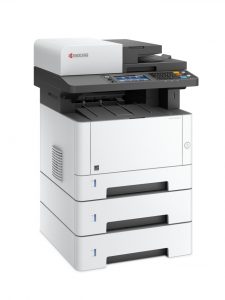
Despite high profile warnings like the incident in February this year which saw a hacker hijack more than 150,000 printers accidentally left accessible via the web, only three-quarters (76 per cent) of public sector organisations have a policy relating to the use of USB/external hard drives, with just 40 per cent of the policies covering printing via multifunctional devices. There was also a lack of certainty around current legislation, with 29 per cent unconfident about how long documents should be kept for.
“Without adequate protection, cyber attackers can easily gain access to multifunctional devices and the data they store, potentially then gaining access to unencrypted data available across entire IT networks, bypassing company firewalls in the process,” Ginja said, adding: “Printing and data go hand-in-hand – just think about how much sensitive information is printed or scanned at your organisation every day. As the new fines draw closer, now is a great time to analyse your print security.”
kyoceradocumentsolutions.co.uk
